
Why Does My Cat Meow?
Cat meowing is often misunderstood as random “complaining,” but in reality, it is a highly intentional form of communication directed at humans. When cats meow, they are usually trying to influence their environment or express an unmet need.
From my experience working with cats for over a decade, many owners assume meowing is meaningless or something to be ignored. In reality, cats are often clearly communicating hunger, curiosity, or a desire for interaction. Common causes include being hungry, wanting attention or petting, seeking access to spaces like windows or doors, or trying to initiate routine events such as feeding time. Some cats even vocalize to locate other pets in the home or announce predictable behaviors like going to the litter box.
One of the most common case patterns I encounter is related to feeding routines, especially after weight-loss plans. Owners often successfully reduce food intake, but then fail to adjust feeding amounts once the cat reaches a healthy weight. The result is increased vocalization. In many cases, simply restoring appropriate caloric intake reduces meowing by as much as 90%. This highlights how strongly food-related communication drives feline vocal behavior.
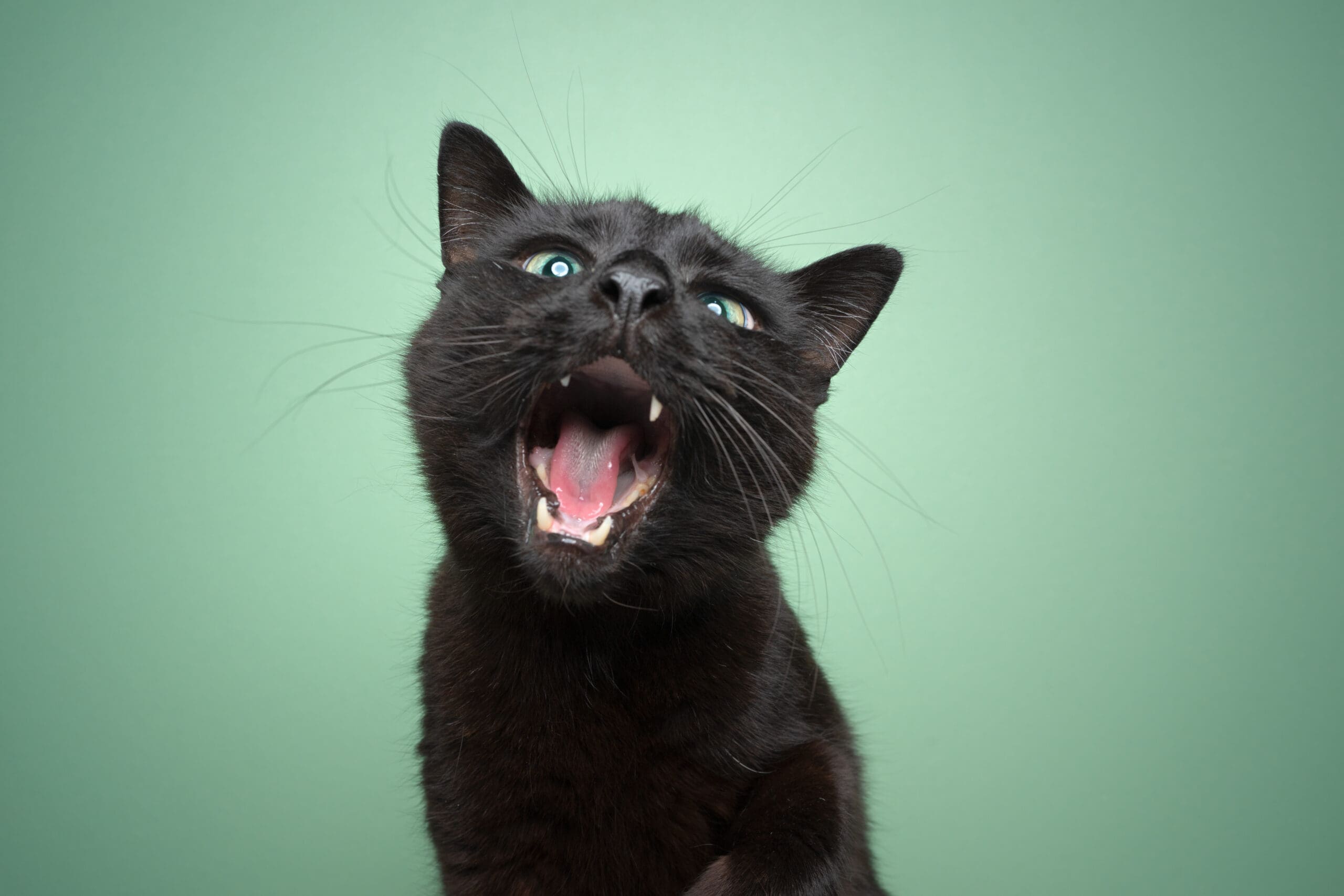
Cats also adapt their vocal tone to express urgency or distress, and they often combine meowing with physical cues such as pawing, staring at food areas, or leading owners toward cupboards or feeders. These are not random behaviors—they are coordinated communication attempts.
The key takeaway is simple: cats are not “complaining for nothing.” They are communicating needs, curiosity, and desires in the only language they have available to influence us. When we slow down and observe the context behind the vocalization, we often find clear, solvable causes rather than “bad behavior.” Need help? We can help you understand and modify your cat’s meows.