

Rated 5 stars on Google Reviews
Cat Behaviour Expert
Online Cat Manners Services | Based in Montreal
Why Choose Our Cat Behaviour Services?



Our Services


Other
Testimonials





People like you modify cat behavior every day

Choose
a date and a time for the consult

Contribute to the discussion
by filling out the questionnaire and by engaging with us during the consult

Apply the action plan
and see the behavior change happen!
Frequently asked questions about cat training
You don’t need to be an experienced animal trainer to train your cat. Anyone can do it. You just need to use the right techniques.
It depends on the problem. Cats are like humans: the more they repeat the same behavior, the more it becomes their default. Think about what happens if you move the coat rack from the left to the right side of your front door. It will take you two weeks to stop coming in to hang your coat on the left side… into thin air. It’s the same for your cat. If they have been repeating the same routine for four years, we’ll need to be a little more patient. Many behaviors are resolved in a few days or weeks, but some, like cohabitation issues between cats or long-standing litter box problems, typically take longer. It’s definitely worth seeking help as soon as possible.
It’s never too early or too late! Of course, you must consider the cat’s physical condition (old age, pain, youth). Since behavior can be modified without pain or threat, you can develop an action plan and implement it at any age. The goal is always to make it enjoyable for the cat and to create a scenario where success is easy so that they achieve it quickly.
Have more questions?
Book a Cat Behaviour Consult
If you would like to stop being angry at your cat and would like to be happy to be sharing your life with them, we are here to give you the tools to do so.
Cat Behavior Issues
Most people run into issues with their cat’s behavior and feel baffled. You are not alone. We create action plans that empower you to modify your cat’s behavior, so that you can enjoy peaceful cohabitation with them
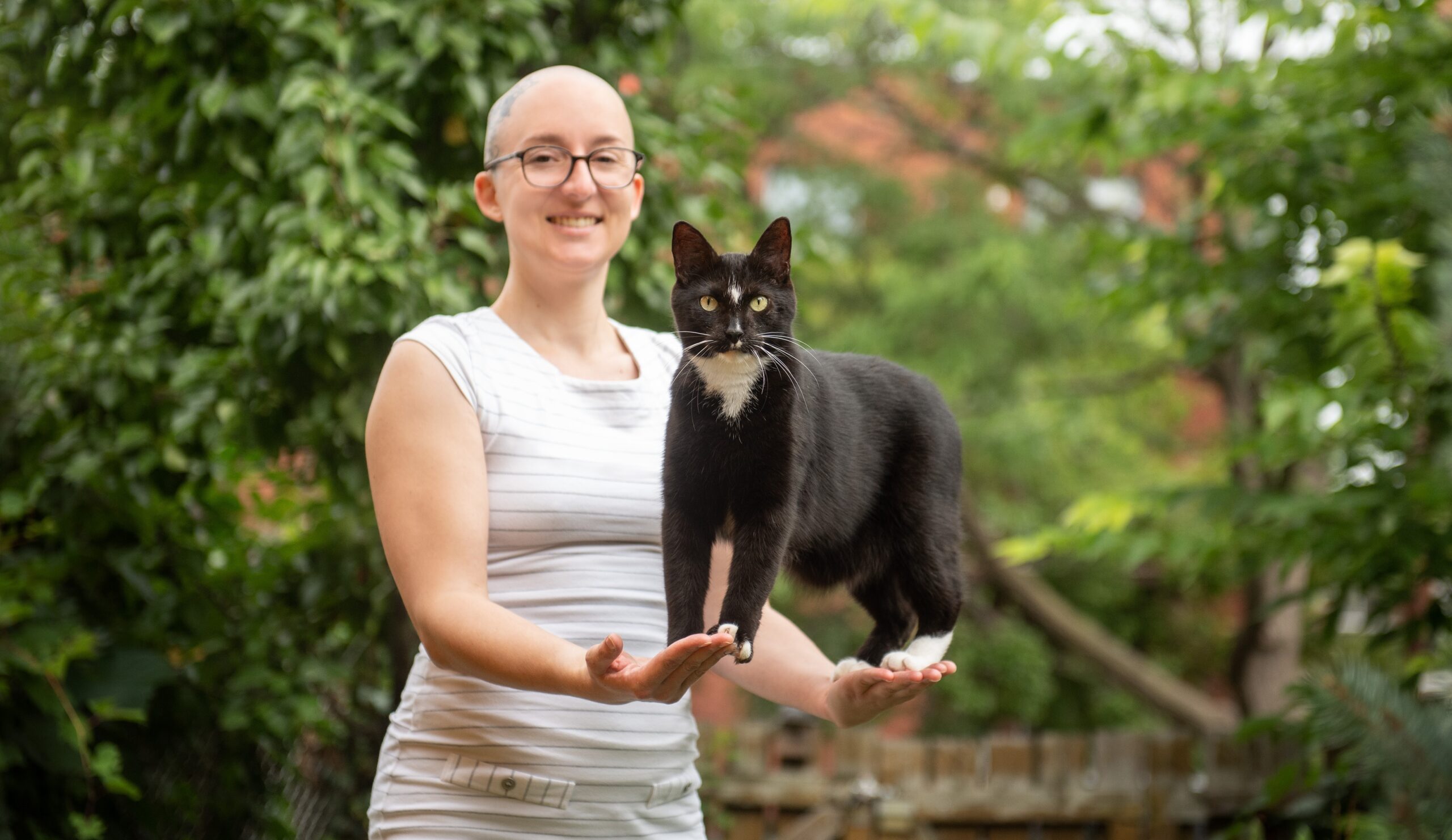
Caroline Crevier-Chabot
Feline Behavior Specialist
Caroline helps cat owners resolve behavioral problems using methods that respect feline well-being. She has over 10 years of experience training cats and 20 years of experience in animal training.
Many cat owners wonder how to train a cat when they encounter problems such as aggression, nighttime meowing, or inappropriate elimination. Fortunately, it is possible to modify a cat’s behavior using methods that are respectful and easy for humans to implement.
Why is cat training important?
A cat that knows how to navigate your home is a much better companion than one that feels lost. If everyone in the house puts their dirty laundry in the hamper, takes off their shoes when entering, and watches TV at a reasonable volume, everyone gets along much better.
Your cat doesn’t have shoes to take off, but they do plenty of other things around the house during the day!
- They say hello (in their own way).
- They play with toys.
- They use the litter box.
- They interact with the other animals in the house.
- They communicate when they want to be petted or when they’d rather you stopped.
- They scratch the scratching posts.
- They eat their food.
- They refrain from stealing your dinner, etc.
These are all activities that may or may not appeal to the humans they live with, depending on how they do them:
- On the scratching post rather than the sofa.
- In the litter box rather than on the patio door.
- By whipping his tail rather than biting.
- Etc.
Training your cat allows you to live better with them.
Don’t get angry
When we haven’t acquired the necessary skills, we resort to the few tools you have:
- We yell.
- We threaten.
- We hurt.
Fortunately, we don’t need to do that to train our cats!

Common mistakes when training a cat
Thinking that threatening will stop the behavior
Your cat will be afraid of YOU. They won’t necessarily connect the dots to what you didn’t like them doing. Most importantly, they won’t know WHAT to do differently.
If I yell “NO!” at you, but don’t then explain what I wanted (for you to stop moving because there’s a pothole in the road ahead), you might think I disagreed with you during our conversation, that I suddenly realized I forgot to lock the door when I left, or that I’m irritated by your posture… There are so many possibilities that we don’t know what we did wrong.
How can our cat learn to do better if they don’t know WHAT NOT TO DO AND WHAT TO DO INSTEAD? Training a cat means teaching them what you WANT them to do, clearly. Not by yelling.
Blaming the cat
It makes us feel good in the moment, as if it’s not our fault, but ultimately, it changes nothing. If we want to share our home with an animal, it’s up to us to create an environment and interactions that put the cat in a position to succeed easily. We’ll also want to teach them how to function in our home, with empathy and calmness.
Considering that cats are a species without behavioral needs
Just because they’re “domesticated” doesn’t mean cats are blank slates. Cats come with species-typical behaviors and needs that must be met in their environment if they are to feel good. The good news is that we can satisfy their needs in our homes with a little creativity and environmental engineering.
How to train a cat step by step
Training involves two main approaches:
- Creating a winning environment.
- Rewarding good behavior.
Often, if the litter box is optimized, the scratching post is ideal, and the human learns to act more appropriately, the problem suddenly disappears.
Sometimes, a little more work will be required. We will teach our cat how to behave in the problematic situation by making the right action rewarding.
Can a cat really be trained?
Because cats haven’t historically been trained as much as dogs, we tend to believe it’s impossible. But that’s wrong!
All species on Earth benefit from learning and modifying their behavior. A species that can’t adapt simply doesn’t survive. Cats are everywhere around us: they clearly know how to adapt very well!
Train
Teach
Learn
Educate
Modify
Guide
All these words apply to cats.
We do it with kindness, meeting the cat where they are, guiding them towards our goal, respecting their learning pace and their physical and emotional limits, and adapting to the situation in the moment.
Communicating a new way of interacting with a cat is very rewarding. When we respect each other, we find it much more pleasurable to teach, on the one side, and to learn, on the other.
Steps to train a cat
Feline behavioral science and ethology guide our approach:
- Adapt the environment
- Move the litter box out of the corner where the dog ambushes the cat.
- Provide several resting areas to avoid competition.
- Offer perches out of reach of children.
- Provide hiding places so the cat has a sanctuary if they need one.
- etc.
- Adapt your own behavior
- Let your cat ask for cuddles rather than forcing them.
- Teach children that a cat’s four paws should always remain on the ground and that they should be petted with a flat hand or using the curve of a large bowl, always with fingers pressed together.
- Stop pulling your cat out from under the bed to see them.
- Clean the litter box twice a day.
- etc.
- Train the behaviors you want
- Find a treat your cat loves.
- Save it for training sessions.
- Reward when you see the desired behavior.
- Or approximate it slowly if you can’t catch it fully fledged.

Would you like some help?
Are you confused about what’s happening with your cat?
Does your partner say they’ve had enough of the cat?
Are you considering having to tell the kids that their cat has to go?
Would you like to stop being angry at your cat?
Do you want your life with your cat to be fun?
Does this need to change?
I know how annoying it is not to understand what’s happening and have to shoulder the burden of your cat’s behavior. As a behavior professional, I’m an expert in the reasons why cats do the things they do and how to change it. That’s my specialty.
Quick appointment booking
Behaviour issues
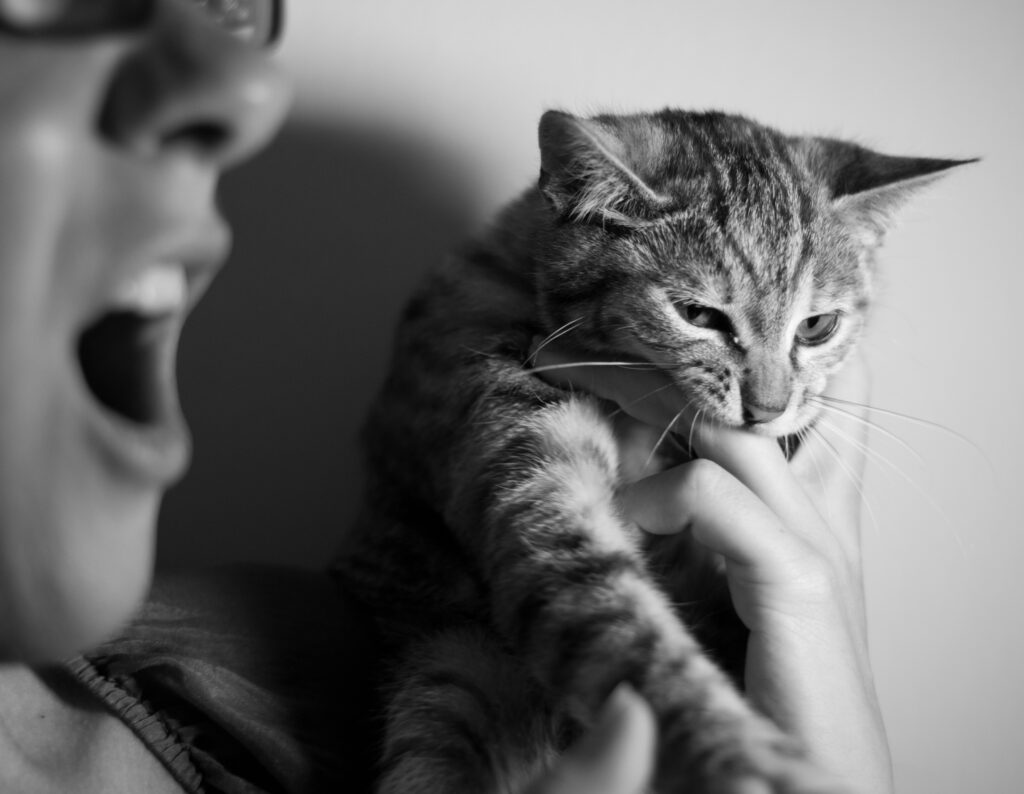
- Aggression
- Fear / Anxiety
- Litter box issues
- Excessive Meowing
- Destruction
Cooperative Care
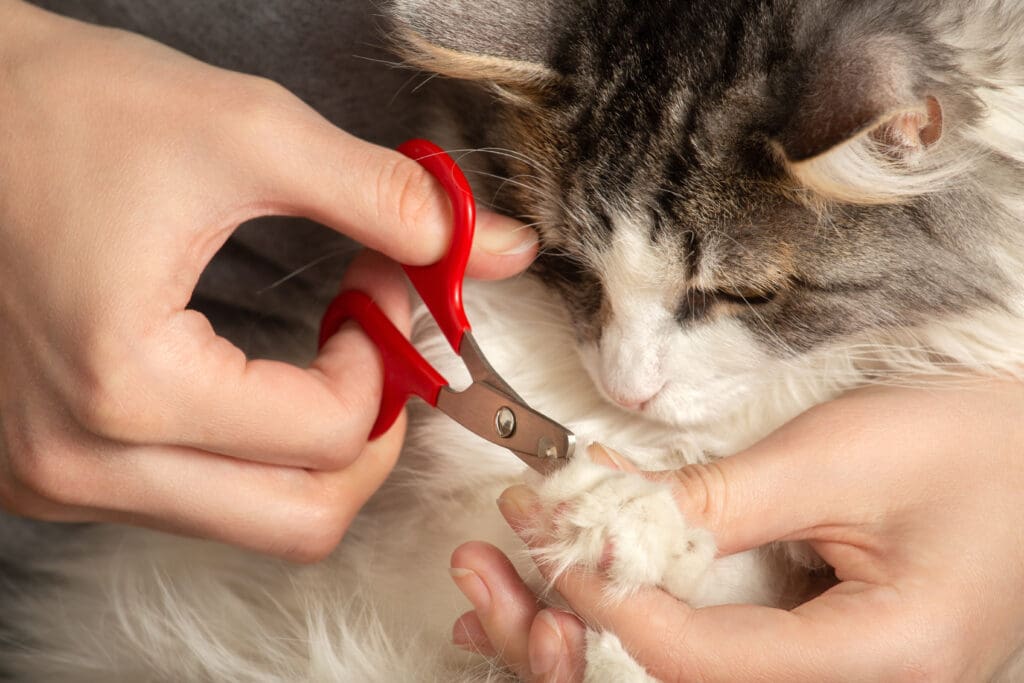
- Nail trim
- Brushing
- Teeth cleaning
- Veterinary visits
- Administering medication
Enrichment and clicker training
- Trick training using positive reinforcement
- Home optimization for enrichment and wellbeing
- Walking on leash
Are you looking for a cat trainer? A cat tamer? What you actually need is a Behavior Consultant! You’re in the right place!
Cats are the new dogs! Don’t leave them behind!
Would you like to see what cats are capable of? Consult our video repertoire of cat training and veterinary handling!